My analysis on the European Public Prosecutor’s Office (EPPO) has been publisehd on the C4EP website.
Click here to check it out!
My analysis on the European Public Prosecutor’s Office (EPPO) has been publisehd on the C4EP website.
Click here to check it out!
Read my analysis on the matter on the C4EP website:
Read my latest analysis of possible implications of the change of Polish government on the C4EP website:
https://c4ep.eu/not-that-pissed-up-anymore-implications-of-the-2023-polish-elections-on-the-eu/
Even though we had a rocky start with our first C4EP event this fall – I managed to catch a bad cold, while I was assigned to be the moderator of the event, one of our speakers indicated that he might be late because of work, and another one cancelling just before the event because of urgent obligations related to the upcoming EU Summit – we are pleased with how our „European Elections through Young Eyes” event turned out.
We have addressed many topics from the participation of youth in the elections through the Spitzenkandidaten process, even to the „F” word, dreaded all around the EU bubble of Brussels (in this case: the federalisation of the European Union).

It was great to cooperate with our invited speakers, Krisztina and Ivan from the European Parliament, but also our audience for being with us yesterday and staying with us after the event for a cool chat with some wine. We hope that You will join us in our next events, too! Additionally, we are grateful to Press Club Brussels to make sure that everything was working without an itch. We will be back!

A detailed report on the event will follow on the C4EP website, until then You can find some more photos on its Instagram and Facebook profiles!
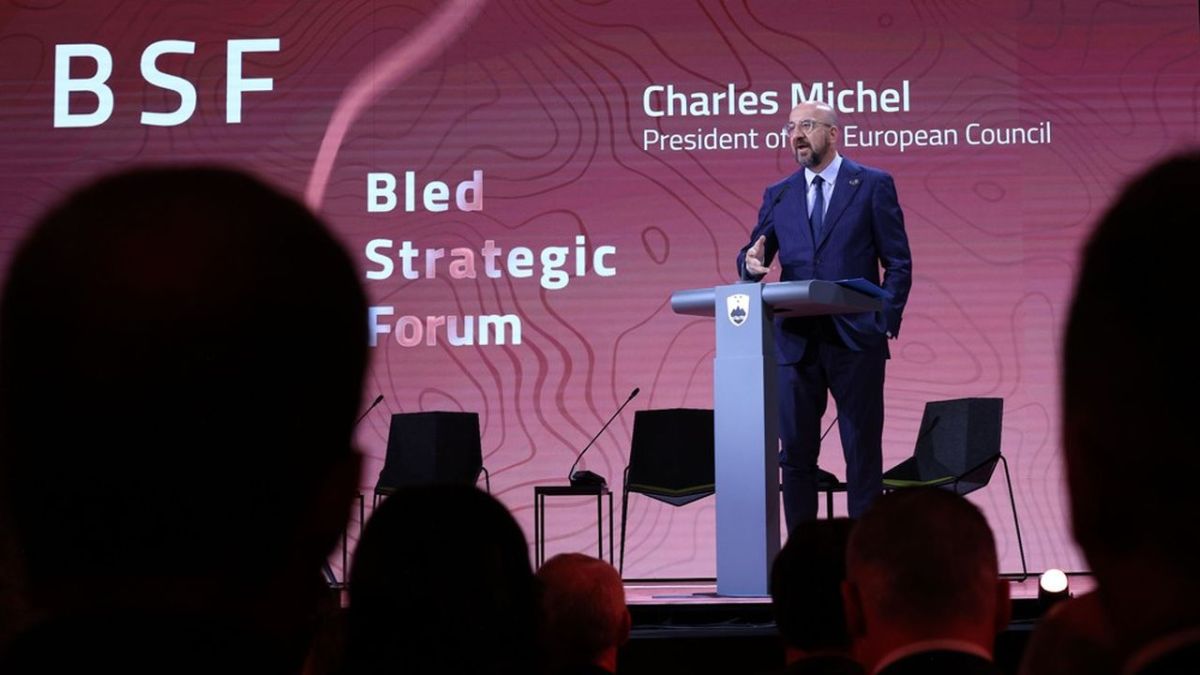
Charles Michel, the president of the European Council has addressed the participants of the prestigious Bled Strategic Forum. He is responsible for close cooperation with heads of states and governments of the EU member states, thus his ideas are worthy of attention as those presumably well-founded and formulated while understanding the positions of these leaders and their respective states.
I have prepared a short analysis of his speech to the C4EP Website (later to be included in its C4EPIECE Newsletter), trying to draw conclusions about the reality of those ideas and the possibility of implementing those during the time left of Michel’s term, ending in 2025.
Read it here!
The first edition of the newsletter of the Centre for European Progression titled C4EPIECE is out now. The focus of the current edition is the struggle over the presidency of the Council of the European Union, but we bring You other important subjects as well from member states and the global theater.
You can read it here.
Register on the C4EP website to receive it directly every time a new edition being published!
Our Brussels-based organisation, Centre for European Progression (C4EP) is in the middle of reinventing itself!
We want to hear what young professionals have to say!
We want to hear what YOU have to say!
Check out our website and social media pages and be part of the process!
The open Russian aggression against Ukraine during February of 2022 has not only opened the usual questions of armed conflict situations, but also has applied tense pressure on new institutions of international law and European legal-political cooperation. Not often can we see the worst of international relations (actual use of force and armed violence) testing the best of international relations (multilateral cooperation in the framework legal-political organisations) on the European continent, where most countries are proud of being an active supporter of international organisations like the International Criminal Court.
How can the existing legal-political-institutional framework handle this conflict situation, and most importantly, the violations taking place during that? Is Europe, are the European institutions capable of providing stronger enforcement, or is this only an illusion?
Speakers:
Aleksandr Popov (Estonian Military Academy): General respect for international treaties and the possibility to limit use of force
Agnieszka Bieńczyk-Missala (University of Warsaw): Refugees of the conflict, with special attention paid to the Polish situation
Justinas Žilinskas (Mykolas Romeris University, Vilnius): Criminal responsibility based on the Ukraine Criminal Code
Milan Lipovský (Charles University, Prague): Ad hoc tribunal for the crime of aggression. Good or bad idea?
Evhen Tsybulenko (Kyiv International University / TalTech Law School, Tallinn): Genocide and the possibility of new international criminal fora
Beatrice Onica Jarka (coordinator of the Romanian Competition of International Humanitarian and Refugee Law – Nicolae Titulescu): Measuring the impunity for international crimes: Scene of Crime – Ukraine
Tamás Lattmann (C4EP / University of New York in Prague / Tomori Pál College, Budapest): The role of the EU and European organisations
 Lattmann Tamás honlapja